Balgend: A Strategic Typography Choice for Purposeful Branding
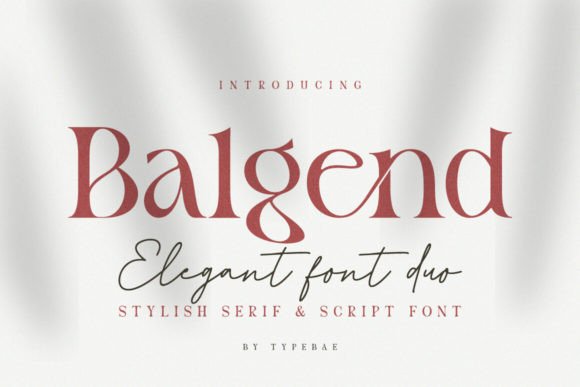
In the landscape of visual communication, few decisions carry as much weight as the selection of type. For entrepreneurs, marketers, and creative professionals aged 20 to 50, typography is not merely a vessel for text; it is a primary driver of perception, credibility, and user engagement. Balgend emerges as a compelling solution for those seeking to elevate their visual identity without sacrificing readability or strategic intent. This captivating font duo marries the structural integrity of a contemporary serif with the fluid grace of an expressive script, offering a rare balance that appeals to both traditional sensibilities and modern creativity.
The strategic value of Balgend lies in its ability to convey sophistication while maintaining approachability. Unlike generic display fonts that often rely on novelty to grab attention, Balgend offers a timeless elegance that supports long-term branding goals. By integrating this font into your design workflow, you are making a calculated decision to prioritize quality and character over fleeting trends. Whether you are refining a corporate identity, designing a high-end editorial layout, or crafting a personal brand for a freelancer, Balgend provides the typographic foundation necessary to communicate authority and artistry simultaneously.
The Architecture of Sophistication: Understanding the Duo
To use any tool effectively, one must first understand its mechanics. Balgend is more than just a pretty set of characters; it is a carefully engineered system comprising two distinct yet harmonious typefaces. The serif component anchors the design with classic stability, providing excellent legibility for body copy and essential information. This is critical for content-heavy projects such as white papers, educational materials, or detailed product descriptions where clarity directly impacts conversion rates.
Conversely, the script component injects personality and human touch into the composition. In a digital environment saturated with rigid sans-serif designs, the organic flow of the Balgend script can serve as a powerful differentiator. It signals creativity and bespoke craftsmanship, qualities that are highly valued by consumers looking for authentic connections with brands. When used together, these elements create a dynamic tension that keeps the viewer engaged, guiding their eye through the hierarchy of information with natural ease.
- Structural Reliability: The serif ensures that complex data remains accessible and professional.
- Expressive Flourish: The script adds emotional resonance, perfect for headlines and call-to-action elements.
- Visual Harmony: The shared design DNA between the two styles prevents visual dissonance in mixed layouts.
Strategic Applications Across Business Functions
The versatility of Balgend makes it applicable across a wide spectrum of business functions, from operations to customer experience. However, its deployment should always be driven by specific objectives rather than aesthetic whim. For small business owners and freelancers, establishing a unique voice is paramount. Balgend allows these entities to project an image of established expertise, bridging the gap between startup agility and enterprise polish.
In the realm of marketing and advertising, the font's dual nature supports nuanced storytelling. A campaign might utilize the robust serif to present hard facts and statistics, building trust through transparency, while employing the script to articulate the brand's mission or values, creating an emotional hook. This separation of function allows for a layered communication strategy that addresses both the rational and emotional sides of consumer decision-making.
For educators and publishers, the readability of the Balgend serif is particularly advantageous. Long-form content requires a typeface that reduces cognitive load, allowing readers to focus on the material rather than the medium. Meanwhile, the script can be strategically deployed for chapter titles, pull quotes, or emphasis, breaking up dense text and adding a sense of curated care to the publication. This thoughtful approach enhances the learning experience and encourages deeper engagement with the content.
Enhancing Customer Experience Through Design
Customer experience (CX) is increasingly defined by micro-interactions and visual cues. Subtle details, such as the choice of typography, contribute significantly to the overall perception of service quality. A website or application utilizing Balgend signals to the user that the creator has invested time and resources into the presentation. This perception of effort translates into perceived value, fostering loyalty and encouraging repeat interactions.
When designing digital interfaces, the PUA encoding feature of Balgend becomes a practical asset. PUA (Private Use Area) encoding allows designers to access a vast array of glyphs and ligatures that standard encodings might miss. This means that special characters, stylistic alternates, and decorative elements are readily available without requiring complex workarounds or third-party plugins. For developers and designers focused on efficiency, this streamlines the production process, ensuring that the final output matches the intended vision perfectly.
Decision-Making Frameworks for Font Selection
Selecting a font like Balgend requires a shift from reactive choices to proactive strategy. Before committing to this typeface for a major project, consider the following factors to ensure alignment with your broader goals.
- Contextual Fit: Does the elegance of Balgend align with the industry standards of your niche? While it works beautifully for lifestyle brands, luxury goods, and creative agencies, it may feel out of place in sectors requiring stark minimalism or utilitarian functionality.
- Scalability: Evaluate how the font performs across different mediums. Can the script maintain its legibility at small sizes, such as on mobile devices or social media avatars? Will the serif remain crisp when printed on various paper stocks?
- Brand Consistency: Ensure that the tone of Balgend complements your existing brand assets. If your current logo uses a geometric sans-serif, introducing Balgend might require a re-evaluation of your entire visual system to avoid a disjointed appearance.
Making these decisions intentionally prevents the common pitfall of "design drift," where a brand loses its identity by chasing every new trend. Balgend offers a stable, sophisticated option that supports a cohesive narrative over the long term.
Risks and Mitigation Strategies
Even the most well-crafted tools carry risks if misapplied. The primary danger associated with using Balgend—or any distinctive font—is the potential for overuse. Because the script element is so visually striking, there is a temptation to apply it indiscriminately. This can lead to visual fatigue, where the reader becomes overwhelmed by the lack of negative space and contrast.
To mitigate this risk, adopt a disciplined approach to hierarchy. Use the script sparingly, reserving it for key moments of emphasis. Let the serif do the heavy lifting for paragraphs and body text. Remember that good design is often about what you leave out. If every line is styled with flair, nothing stands out. By treating Balgend as a premium accent rather than a default setting, you preserve its impact and ensure that your message remains clear.
Another consideration is technical compatibility. While PUA encoding offers extensive glyph support, it is essential to verify that the target platforms (web browsers, print services, mobile apps) render these custom characters correctly. Always test your designs in the final delivery format before launch to avoid unexpected rendering issues that could undermine the professional appearance you have worked hard to achieve.
Intentional Usage for Long-Term Results
The ultimate goal of incorporating Balgend into your workflow is to achieve better results through improved communication. This involves a commitment to intentionality. Instead of asking, "Does this look cool?" ask, "Does this help the user understand our value proposition?" When the typography serves the content, the design succeeds.
For creators and bloggers, Balgend can transform a simple blog post into a polished magazine feature. For entrepreneurs, it can turn a pitch deck into a compelling narrative of growth and vision. The font acts as a silent partner in your business strategy, reinforcing the messages you wish to send about quality, attention to detail, and forward-thinking leadership.
By leveraging the strengths of both the serif and script components, you create a visual language that is both authoritative and inviting. This duality is essential in today's market, where consumers demand professionalism but crave authenticity. Balgend provides the structural framework to deliver exactly that, helping you navigate the complexities of modern design with confidence and precision.
As you move forward with your projects, keep the principles of strategic planning in mind. Treat typography as a core component of your operational strategy, not an afterthought. With Balgend, you have a tool that is ready to support your ambitions, provided you wield it with the care and foresight that serious practitioners demand. The result will be a body of work that not only looks exceptional but also drives tangible outcomes for your audience and your bottom line.