Evaluating Callbro: A Comprehensive Guide to Its Design Capabilities and Use Cases
In the landscape of digital typography, selecting the right typeface often feels like navigating a vast sea of options where every font promises a unique identity. For designers, brand managers, and content creators seeking a balance between classic elegance and modern functionality, Callbro has emerged as a compelling candidate. This serif typeface distinguishes itself not merely by its visual aesthetics but by its structural versatility, offering a sophisticated toolkit for professionals who require more than just standard text rendering.
Unlike many contemporary fonts that lean heavily into geometric minimalism or stark display styles, Callbro embraces a refined approach rooted in traditional serif design while incorporating modern adaptability. It is designed to serve as a foundational element for high-stakes communication, whether that involves corporate branding materials, editorial layouts, or intimate invitation suites. The core value proposition of this typeface lies in its ability to convey authority without sacrificing approachability, making it a subject of interest for those evaluating their typographic resources.
Distinguishing Features of the Type Family
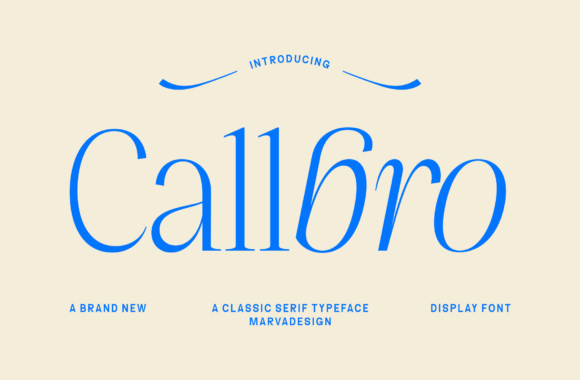
The primary differentiator of Callbro is its dual-style architecture. While many serif families offer only standard upright and italic variations, Callbro introduces a distinctive Semi-Script style alongside its Regular weight. This inclusion allows for a dynamic range of expression within a single family. The Regular style maintains the clean, readable lines expected of professional typography, ensuring that body text remains legible even at smaller sizes. In contrast, the Semi-Script variant provides an expressive, flowing alternative that mimics the fluidity of handwriting without compromising the structural integrity of the letterforms.
This duality addresses a common challenge in design: the need to switch between formal tone and creative flair. By keeping both styles under one umbrella, designers can maintain brand consistency while varying the emotional resonance of the message. Furthermore, the typeface includes a robust set of alternative characters and ligatures. These are not merely decorative add-ons; they are functional tools that prevent repetitive patterns in text and add a layer of sophistication to headlines and pull quotes. Ligatures ensure that combinations of letters flow naturally, eliminating awkward gaps and creating a unified visual rhythm that is often absent in generic font libraries.
Readability and Structural Refinement
One of the most critical metrics when evaluating a serif typeface is its x-height and stroke contrast. Callbro demonstrates a well-balanced structure that prioritizes readability. The strokes are refined rather than heavy, allowing the text to breathe on the page or screen. This characteristic makes it particularly suitable for long-form content, such as magazine articles, white papers, or annual reports, where reader fatigue is a genuine concern. The open counters and clear differentiation between similar characters (such as 'I' and 'l') further enhance its utility in professional settings.
When compared to other serif fonts that prioritize extreme stylization, Callbro takes a more measured approach. It does not demand attention through aggressive contrast or unusual proportions; instead, it invites the reader in with a sense of calm competence. This subtlety is often what separates a good font from a great one in corporate environments, where the goal is to communicate information clearly rather than distract from it.
Comparative Analysis: Fit and Tradeoffs
When considering typography for a project, the decision often comes down to comparing Callbro against broader categories of fonts, such as transitional serifs or humanist serifs. Transitional serifs, which bridge the gap between old-style and modern designs, often feature higher contrast and sharper angles. While these can be striking, they sometimes struggle with legibility in digital formats or small print sizes. Callbro offers a middle ground, retaining the elegance of high-contrast serifs while maintaining the warmth and accessibility of humanist designs.
Tradeoffs in Versatility
No single typeface is perfect for every scenario. The strength of Callbro's Semi-Script style is also a potential limitation depending on the context. While the script elements add charm and personality, they may not align with brands that require strict uniformity or ultra-modern, minimalist identities. In such cases, a purely geometric sans-serif or a rigid slab serif might be a more appropriate choice. Additionally, the presence of alternative characters requires a certain level of typographic control. If a designer lacks experience in utilizing OpenType features, the full potential of the font may go unnoticed, resulting in a standard appearance that fails to showcase its unique capabilities.
Decision Factors for Implementation
- Brand Personality: Does the brand voice benefit from a touch of classical elegance? Callbro excels here, whereas brands targeting Gen Z with a raw, street-style aesthetic might find it too formal.
- Medium of Delivery: For print-heavy projects like luxury invitations or high-end brochures, Callbro shines due to its fine details. For low-resolution mobile interfaces, the standard Regular weight performs well, but the script elements should be used sparingly to ensure clarity.
- Content Volume: If the project involves thousands of words of body copy, the Regular style is essential. The Semi-Script is best reserved for short bursts of text, such as headings, logos, or call-to-action buttons.
Strategic Applications and Real-World Examples
To understand the practical value of Callbro, it is helpful to examine specific scenarios where its characteristics provide a distinct advantage. In the realm of corporate branding, the font can be instrumental in establishing trust. A financial firm or a law practice looking to appear established yet forward-thinking could utilize the Regular weight for their reports and the Semi-Script for their logo mark. This combination suggests stability (through the serif) and personal care (through the script).
In editorial design, the alternative characters and ligatures become invaluable assets. Magazines and newspapers often struggle with the monotony of repeated word structures. By enabling discretionary ligatures, Callbro allows editors to create text blocks that feel hand-crafted and curated. This is particularly effective for lifestyle publications or fashion magazines where the visual texture of the text contributes to the overall narrative.
For high-end marketing campaigns, the font's ability to convey "luxury" without being ostentatious is a key selling point. When designing an invitation for a gala or a packaging label for a premium product, the subtle curves and refined serifs of Callbro elevate the perceived value of the item. Unlike display fonts that scream for attention, Callbro whispers quality, allowing the imagery and product photography to take center stage while providing a dignified frame.
When to Choose Alternatives
While Callbro is a versatile tool, it is not a universal solution. There are specific situations where other typographic approaches may yield better results. For instance, if a project requires a highly technical or industrial look, a monospaced font or a bold grotesque sans-serif would be more appropriate. Similarly, for digital products focused on speed and efficiency, such as SaaS dashboards or e-commerce checkout flows, the ornamental nature of Callbro might slow down the user's cognitive processing.
Furthermore, the cost-benefit analysis of licensing must be considered. High-quality serif families with extensive OpenType features often come with a higher price tag than basic system fonts. For small-scale projects with limited budgets, a free alternative might suffice, provided the project does not rely on the specific nuances of Callbro's alternative characters. However, for any endeavor where brand perception is paramount, the investment in a specialized font like Callbro often pays dividends in the longevity and professionalism of the final output.
Making the Final Decision
Selecting a typeface is a strategic decision that influences how a message is received and interpreted. Callbro stands out in the crowded market by successfully merging the timeless appeal of classic serif design with the functional requirements of modern digital media. Its unique blend of Regular and Semi-Script styles, supported by a rich array of ligatures and alternatives, offers a level of customization that few other fonts provide.
For professionals tasked with creating impactful designs, the question is not simply whether Callbro looks good, but whether its specific attributes align with the goals of the project. If the objective is to evoke sophistication, ensure readability, and add a touch of artistic flair without overwhelming the content, Callbro presents a compelling case. However, if the project demands radical simplicity or extreme uniformity, exploring other options remains a prudent step. Ultimately, the right choice depends on a careful evaluation of the brand's needs, the medium of delivery, and the desired emotional response from the audience.