Dream Coast: Bringing 80s Retro Vibes to Modern Design Projects
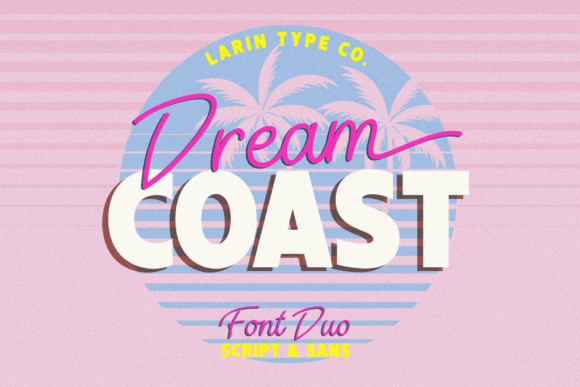
There is a specific kind of magic that happens when you combine the nostalgia of the past with the clean lines of modern typography. Dream Coast captures exactly that feeling. It is not just another vintage font duo; it is a carefully curated collection inspired by the vibrant posters of the 1980s, yet refined enough to stand out in today's digital landscape. If you have ever struggled to find a typeface that balances retro charm with professional readability, this pair might be the missing piece in your creative toolkit.
The beauty of this font lies in its duality. It offers a robust sans-serif companion paired with a flowing monoline script, creating a visual rhythm that feels both familiar and fresh. Whether you are designing a brand identity from scratch or adding a touch of personality to an existing project, Dream Coast provides the versatility needed to adapt to almost any aesthetic requirement.
The Power of the Sans-Serif Companion
At the core of the Dream Coast duo is a multi-purpose sans-serif font that refuses to compromise on clarity. In an era where information overload is constant, the ability to communicate quickly and effectively is paramount. This font excels in situations where legibility is non-negotiable but style still matters.
Imagine you are working on a series of social media graphics for a lifestyle brand. You need headlines that grab attention immediately but body text that remains easy to read on small mobile screens. The Dream Coast sans-serif handles this perfectly. Its modern structure ensures that even long descriptions or product details don't feel cluttered or outdated. It strips away unnecessary flourishes while maintaining a distinct character that prevents the design from looking generic.
- Advertising Campaigns: When creating billboards or print ads, you need type that commands space without shouting. The geometric precision of this sans-serif allows for impactful layouts that guide the viewer's eye naturally.
- Packaging Design: For product labels, especially in the food, beverage, or cosmetic industries, this font offers a clean canvas. It works beautifully for listing ingredients or features, ensuring compliance with regulations while keeping the shelf appeal high.
- Editorial Layouts: Magazine spreads and book covers benefit from the balanced weight distribution. It pairs seamlessly with serif body text if you choose to mix fonts, or stands alone as a striking typographic element.
Designers often worry that "modern" means "cold." However, the subtle curves and open apertures in this font add a human touch that makes it approachable. It is perfect for startups looking to establish a friendly yet professional image, or established companies wanting to refresh their visual language without losing their core identity.
Adding Soul with Monoline Script
If the sans-serif is the backbone, the monoline script is the heartbeat. This is where Dream Coast truly shines, offering a handwritten elegance that feels effortless rather than forced. Unlike many scripts that can look stiff or overly decorative, this one flows with a natural rhythm that mimics real calligraphy.
The inclusion of alternates is a game-changer for designers who demand uniqueness. Instead of repeating the same letterforms, you can swap in different versions of 'a', 'e', or 't' to create a more organic, custom look. This level of detail is crucial when you are crafting logos or signatures that need to feel personal and bespoke.
Consider the scenario of a wedding invitation suite. The goal is to convey romance and celebration. A standard blocky font would feel out of place, but the Dream Coast script brings a sense of occasion. By utilizing the varied ends wash, you can control the flow of the text, making it appear as though it was written by hand with a brush. This adds a layer of sophistication that elevates the entire perception of the event.
Beyond weddings, this script is incredibly versatile for branding. Think about coffee shop menus, boutique clothing tags, or artisanal soap packaging. The script adds a tactile quality to digital designs, making them feel more tangible and crafted. It bridges the gap between mass production and handmade artistry.
Real-World Applications Across Industries
The true test of any font is how well it performs in diverse environments. Dream Coast has been designed to cross industry boundaries, proving its utility in fields ranging from entertainment to retail.
In the entertainment sector, particularly for music festivals or film posters, the 80s inspiration is a direct nod to a golden age of graphic design. The combination of bold sans-serif headlines and sweeping script accents creates a dynamic contrast that mirrors the energy of live performances. It evokes memories of neon lights, vinyl records, and cassette tapes, instantly transporting the audience to a specific cultural moment.
For e-commerce businesses, the font serves a dual purpose. The sans-serif builds trust and clarity in product descriptions, while the script can be used for promotional banners or limited-time offer tags. This mix helps break up the monotony of standard web layouts, drawing the user's eye to key selling points without overwhelming them with too much visual noise.
Event planners will find particular value in the flexibility of the alternates. Every event has a unique theme, whether it is a corporate gala, a summer beach party, or a holiday market. The ability to tweak the letterforms allows designers to tailor the typography to fit the specific mood of the occasion. A beach party might use a looser, more relaxed version of the script, while a formal gala could utilize tighter, more structured variants.
Navigating Considerations and Limitations
While Dream Coast is a powerful tool, like any design resource, it requires thoughtful application to achieve the best results. Understanding its strengths and potential limitations is key to using it effectively.
The primary consideration is context. Because the font has such a strong retro identity, it may not be suitable for every project. If you are designing for a highly technical field, such as medical software or financial reporting, the 80s influence might feel too casual or distracting. In these cases, it is best to use the sans-serif component sparingly or pair it with a more neutral typeface to ground the design.
Another factor to keep in mind is readability at small sizes. While the sans-serif is excellent for body text, the monoline script is best reserved for headlines, titles, and short phrases. Attempting to set long paragraphs in script can reduce legibility and frustrate readers. The "ends wash" feature, which gives the letters a tapered finish, looks stunning in large formats but can become muddy when scaled down too much.
Additionally, while the alternates provide great variety, overusing them can make text look inconsistent. The trick is to use them strategically to enhance the flow of the design rather than to decorate every single letter. A little goes a long way in maintaining a cohesive visual hierarchy.
Making the Most of Your Creative Vision
Ultimately, Dream Coast is about giving designers the freedom to express ideas with confidence. It removes the friction of searching for the right typeface, offering a complete solution that handles both structure and style. Whether you are a seasoned graphic designer looking to expand your portfolio or a business owner trying to visualize your brand, this font duo offers a reliable foundation.
The 80s were a time of experimentation and bold choices, and Dream Coast invites you to embrace that spirit. By blending the nostalgic warmth of the past with the functional demands of the present, it creates a bridge that connects audiences across generations. When you choose Dream Coast, you are not just selecting a font; you are choosing a narrative that speaks to creativity, history, and modern innovation all at once.
As you explore your next project, consider how this duo can transform your message. From the first headline to the final signature, let the versatility of Dream Coast guide your design decisions. With the right application, it can turn a simple layout into a memorable experience that resonates with anyone who sees it.