Mama Daddie: Balancing Artistic Flourish with Professional Impact
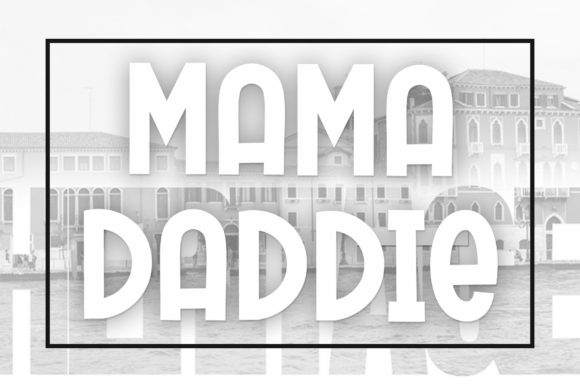
If you are looking to infuse your brand or project with a sense of warmth and artisanal craftsmanship, Mama Daddie stands out as a sophisticated script font that demands attention. It is not merely a decorative typeface; it is a tool designed to convey customized artistry through its sweeping, looping ascenders. However, the very features that make this font charming can also lead to significant design pitfalls if applied without strategic foresight. Many creators rush to download and use Mama Daddie because they see the aesthetic appeal in marketing materials, only to find their final output looks cluttered or difficult to read.
The goal is not to avoid beautiful typography, but to ensure that beauty serves communication rather than hindering it. When used correctly, Mama Daddie transforms simple text into an experience, perfect for artisanal food branding, boutique product packaging, and upscale lifestyle marketing. But when misused, it can obscure your message and confuse your audience. Understanding the nuances of this typeface is essential for anyone serious about maintaining high-quality visual standards.
Common Pitfalls in Choosing and Applying Script Fonts
One of the most frequent mistakes designers and business owners make is assuming that a script font like Mama Daddie can serve as a primary body text. The organic aesthetic and calligraphic style are intended for headlines, logos, and short phrases where character shines. Using it for long paragraphs creates a visual barrier that forces the reader to work too hard to decipher the content. This decision directly impacts readability and user satisfaction, often causing visitors to leave a website or ignore a brochure before they even grasp the core message.
Another overlooked detail involves the weight and contrast of the letterforms. Mama Daddie features varying stroke widths that mimic hand-lettering. If you apply this font at a small size, such as in footnotes or fine print on packaging, the delicate loops may disappear or merge together. This results in a muddy appearance that defeats the purpose of the "artisanal" look. Instead of appearing elegant, the text becomes illegible, which can be particularly damaging for legal disclaimers or ingredient lists on food products.
Furthermore, there is a tendency to overuse the font's unique personality. Some users feel compelled to apply Mama Daddie to every element of a design, from navigation bars to social media captions. While the font is versatile, it has a strong voice. Overusing it dilutes its impact, making the entire design feel chaotic rather than curated. A balanced approach requires reserving the font for specific moments where you want to emphasize emotion, quality, or tradition.
Why Context Matters More Than Style
The success of using Mama Daddie often depends on the context in which it appears. For example, placing this font on a sleek, modern tech startup's landing page might create a jarring disconnect between the visual style and the brand identity. The warm, organic aesthetic suggests handmade goods or traditional values, which may not align with a fast-paced, digital-first service. Before downloading or purchasing the license, consider whether the font supports your brand narrative or contradicts it.
Additionally, many users overlook the importance of pairing. A script font needs a solid foundation. Pairing Mama Daddie with another script or a highly decorative sans-serif often leads to competition rather than harmony. The best approach is to pair it with a clean, neutral sans-serif or a classic serif. This combination allows the Mama Daddie to take center stage while the supporting text provides clarity and structure. This strategy ensures that your design remains professional and easy to navigate.
- Check legibility at different sizes: Ensure the looping ascenders remain distinct when scaled down for mobile screens or small packaging labels.
- Verify licensing terms: Different licenses cover personal projects, commercial use, and extended merchandise. Failing to check this can lead to legal issues and unexpected costs later.
- Evaluate color contrast: Because script fonts have intricate details, low-contrast color combinations (like light gray on white) can make the text invisible. Always test against various backgrounds.
Optimizing Usage for Better Results
To get the most out of Mama Daddie, focus on intentional application. Start by defining the hierarchy of your content. Use the font for titles, subheadings, or key selling points where you want to evoke a feeling of luxury or care. Then, step back and evaluate the overall composition. Does the font enhance the message, or does it distract? If the latter, try reducing the size or switching to a more neutral typeface for the bulk of the information.
For entrepreneurs and small business owners, the cost of a poor design choice can be higher than the price of the font itself. If your packaging looks amateurish due to bad typography, customers may assume the product inside is of lower quality. Conversely, a well-executed design using Mama Daddie can justify a premium price point. The font signals that attention to detail matters, which is a powerful psychological cue for consumers.
When learning to use this font, experiment with kerning and tracking. Script fonts often require manual adjustment to look natural. Automatic spacing can sometimes result in letters overlapping awkwardly or sitting too far apart, breaking the flow of the word. Taking the time to manually adjust these settings adds a layer of polish that distinguishes a professional design from a basic template.
Finally, always test your designs in real-world scenarios. View your logo on a screen, print it on paper, and mock it up on a bottle. What looks good on a monitor might lose definition when printed on textured cardstock. By anticipating these physical limitations, you ensure that the organic aesthetic translates perfectly across all mediums. This proactive approach saves money on reprints and protects your brand reputation.
By avoiding common traps and focusing on strategic usage, Mama Daddie becomes a powerful asset in your design toolkit. It offers a blend of sophistication and warmth that few other typefaces can match. Whether you are launching a new bakery, designing a boutique clothing line, or creating editorial content, the key lies in respecting the font's strengths while mitigating its weaknesses. With careful planning and a clear understanding of your audience, you can create visuals that are not only beautiful but also effective in communicating your unique story.