Morning Made Better: A Comprehensive Evaluation of the Font Family
In the competitive landscape of digital design and print media, selecting the right typography is often the difference between a message that resonates and one that goes unnoticed. Designers are constantly seeking typefaces that balance personality with functionality. Morning Made Better has emerged as a notable option for projects requiring a blend of playfulness, warmth, and modern flair. This font family distinguishes itself through its unique triad of styles: regular, outline, and script. Understanding the specific characteristics of each style is essential for determining if this typeface aligns with your project's goals.
What Is Morning Made Better?
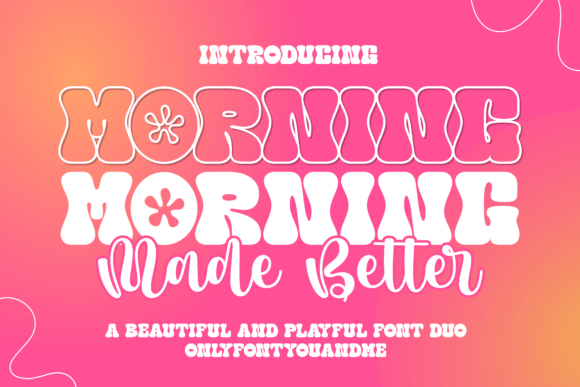
Morning Made Better is not merely a single font but a cohesive family designed to offer versatility across various design contexts. It is characterized by three distinct visual treatments that share a common structural foundation yet convey different emotional tones. The core identity of the typeface relies on bold, rounded letterforms that evoke a sense of optimism and energy. Unlike traditional serif or sans-serif fonts that prioritize neutrality, this family is explicitly crafted to bring a human touch to visual communications.
The architecture of the letters suggests an inflated or bubble-like quality, which immediately captures attention. However, the true value of Morning Made Better lies in how these forms are manipulated across its three variations. By offering a complete set of tools within one family, it allows designers to maintain brand consistency while shifting the mood from high-energy headlines to soft, narrative body text.
Exploring the Three Distinct Styles
To evaluate whether this font is suitable for your needs, it is necessary to examine the specific roles played by its three components. Each style serves a unique function within a layout, contributing to the overall hierarchy and aesthetic.
The Regular Style: Bold and Playful
The regular style of Morning Made Better is defined by its substantial weight and rounded edges. Resembling bubble letters or inflated shapes, this variation conveys a cheerful and energetic vibe. It is inherently loud and requires space to breathe, making it an ideal candidate for eye-catching headlines, logos, or branding elements where immediate recognition is required. The playful nature of the rounded forms reduces visual aggression, creating a friendly atmosphere even when used in large sizes. However, due to its heavy visual presence, it is generally unsuitable for long-form body copy, where legibility and readability are paramount.
The Outline Style: Dimensional and Retro
Utilizing the exact same letterforms as the regular style, the outline variant strips away the solid fill to reveal only the contours. This technique creates a lighter, more dimensional look that adds significant visual contrast to a design. The hollow nature of the letters introduces a slightly retro, modern flair, reminiscent of vintage signage or contemporary street art. This style is particularly effective for backgrounds, watermarks, or secondary headings where texture is needed without the visual weight of solid ink. It allows designers to layer text over images or patterns without completely obscuring the underlying content, provided the contrast remains sufficient.
The Script Style: Warm and Approachable
While the display styles command attention, the script style brings a sense of warmth and friendliness to the table. With its flowing, hand-lettered strokes, it delivers a personal and approachable feel that rigid geometric fonts cannot achieve. This variation softens the bold display fonts above, adding an emotional and expressive touch to the composition. It is excellent for captions, quotes, signatures, or any element intended to feel intimate. The organic flow of the script mimics natural handwriting, which can help build trust and connection with the audience, suggesting that a real person created the content.
Benefits and Practical Applications
The primary benefit of choosing Morning Made Better is its ability to create a visually engaging and lively design system. The combination of these three styles forms a complete toolkit that supports complex layouts without requiring multiple disparate fonts. This cohesion ensures that the final output feels unified rather than cluttered.
- Lifestyle Branding: The cheerful and warm attributes make it a strong fit for blogs, magazines, or social media accounts focused on lifestyle topics.
- Food and Beverage: The playful nature of the regular style and the hand-crafted feel of the script pair well with menus, packaging, and promotional materials for cafes or food trucks.
- Wellness and Health: The rounded, non-threatening shapes convey a sense of care and positivity, aligning well with wellness apps, yoga studios, or health coaching services.
Tradeoffs and Considerations
While the aesthetic appeal is undeniable, there are tradeoffs to consider before integrating Morning Made Better into a project. The most significant limitation is legibility at small sizes. The rounded terminals and variable stroke widths, while charming, can blur together when scaled down for mobile interfaces or fine print. Designers must ensure that the font size remains generous to maintain clarity.
Additionally, the highly stylized nature of the typeface means it may not suit all industries. For corporate finance, legal services, or technical documentation, the playful and informal tone might undermine the authority and seriousness required by those sectors. Overuse of the outline style can also lead to readability issues if the background is too busy, necessitating careful color selection and spacing.
Situational Fit and Alternatives
This font family is a strong fit when the goal is to evoke emotion, nostalgia, or approachability. It excels in environments where the user experience is meant to be light, fun, and inviting. If your project involves storytelling or community building, the script and regular styles can work together to guide the reader through a narrative journey.
Conversely, alternatives may be worth considering if your project demands strict minimalism or maximum data density. In scenarios where information density is critical, such as dashboards or data-heavy reports, a neutral sans-serif font would likely provide better utility. Similarly, for luxury branding that relies on elegance and restraint, the bubbly nature of Morning Made Better might appear too casual. In such cases, a more refined serif or a geometric sans-serif could be more appropriate.
Decision-Making Insights
When evaluating Morning Made Better, ask yourself if your brand voice matches the font's personality. Does your message require a hug or a handshake? If the former, this font family offers a compelling solution. The key to success lies in the balanced application of its three styles. Use the regular style to grab attention, the outline to add depth and texture, and the script to introduce humanity.
Ultimately, the decision should be driven by the specific context of your audience and the medium you are designing for. Test the fonts in their intended environment to ensure they remain legible and effective. If the goal is to create a memorable, positive impression in the lifestyle, food, or wellness sectors, Morning Made Better provides a robust and versatile foundation for your design strategy.